Solar lanterns are bought on a runtime promise and returned when that promise fades, so the battery test programme is essentially a warranty-definition exercise. This paper layers the evidence a manufacturer needs: the IEC 62257 pico-solar performance and quality tests that Lighting Global and VeraSol recognise, the electrical-safety and transport evidence for the nickel-metal hydride cells, and an accelerated cycle-fade programme that predicts whether the lantern still meets its high-mode runtime after hundreds of nightly cycles.
IEC TS 62257-9-5 defines the comparative test methods a quality lantern must pass: measured light output and its distribution, run-time at each declared brightness setting, the duration before output falls below a useful threshold, battery charge and discharge behaviour, and durability including ingress and mechanical tests. Crucially, runtime is measured from a defined state of charge and under a controlled charge routine, which is why Paper B insists on matching the panel and charge manager to the pack.
A NiMH design supports these tests cleanly because its flat discharge plateau holds LED brightness stable until near end of capacity, and because it accepts the standardised recharge without a complex management IC.
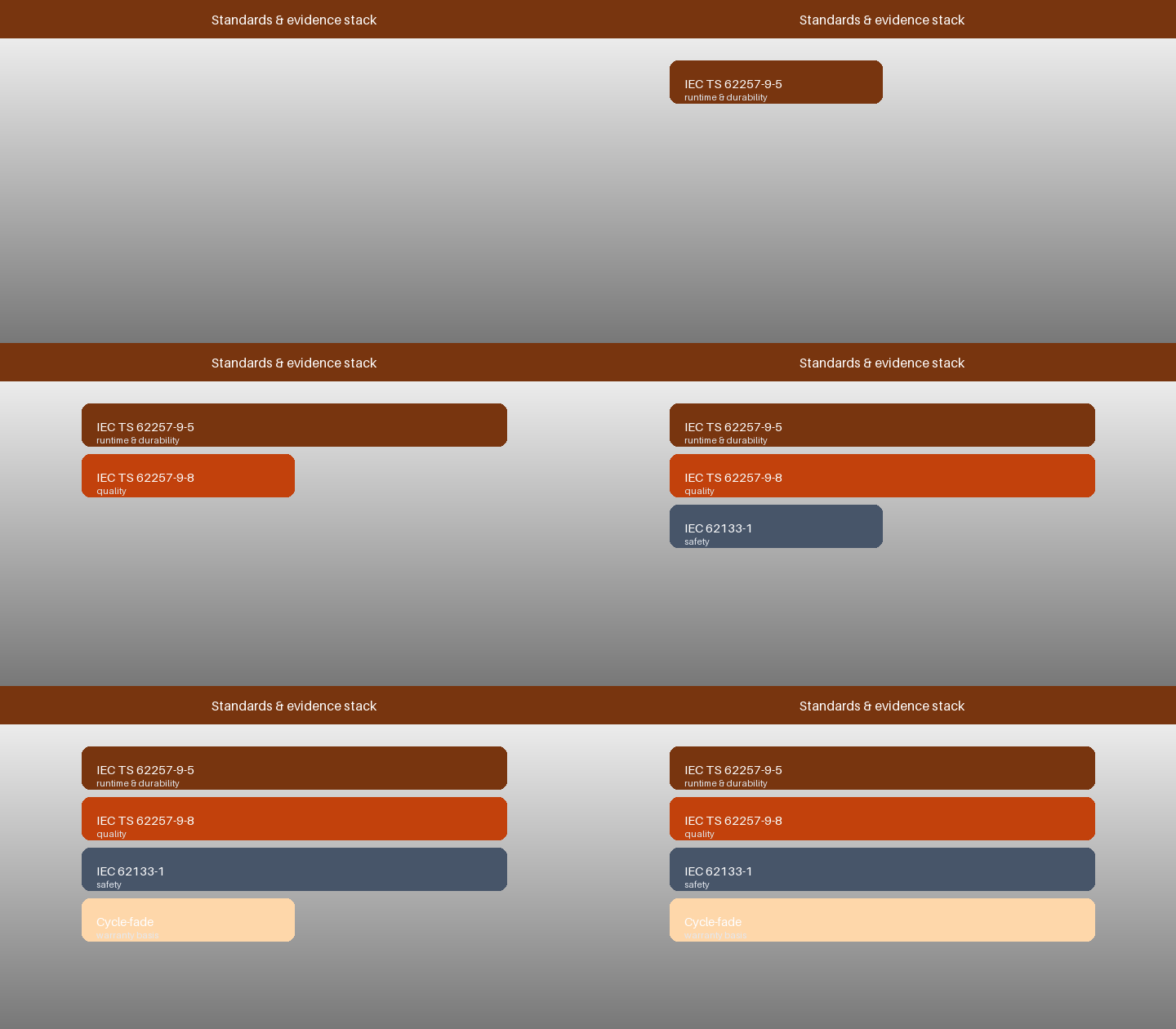
IEC TS 62257-9-8 sets the quality requirements - truth-in-advertising of lumen and runtime, durability, safety protections and reliability - that underpin the Lighting Global/VeraSol quality assurance ecosystem. Independent verification to these methods is what lets a tender cite 'certified to IEC TS 62257-9-5 and IEC TS 62257-9-8', as leading humanitarian lantern brands do.
For the battery this means the advertised autonomy must be reproducible on a sample basis, the pack must include over-charge and short-circuit protection appropriate to the chemistry, and the enclosure must allow the replaceable battery the specification promises.
Behind the system tests sit the cell standards. IEC 62133-1 covers safety requirements for portable sealed nickel-system cells and batteries - the nickel chemistries are in Part 1 - including the abusive electrical and mechanical cases. IEC 61951-2 supplies the performance and endurance reference, including charge retention and the cycling that anchors the >=500-cycle figure. For shipping, UN 38.3 applies, but nickel-metal hydride is not subject to the lithium-air transport restrictions, which simplifies humanitarian logistics considerably.
A welded NiMH pack with matched cells, a thermal fuse, an NTC and a vent-friendly layout satisfies these requirements without the protection-board overhead lithium demands.
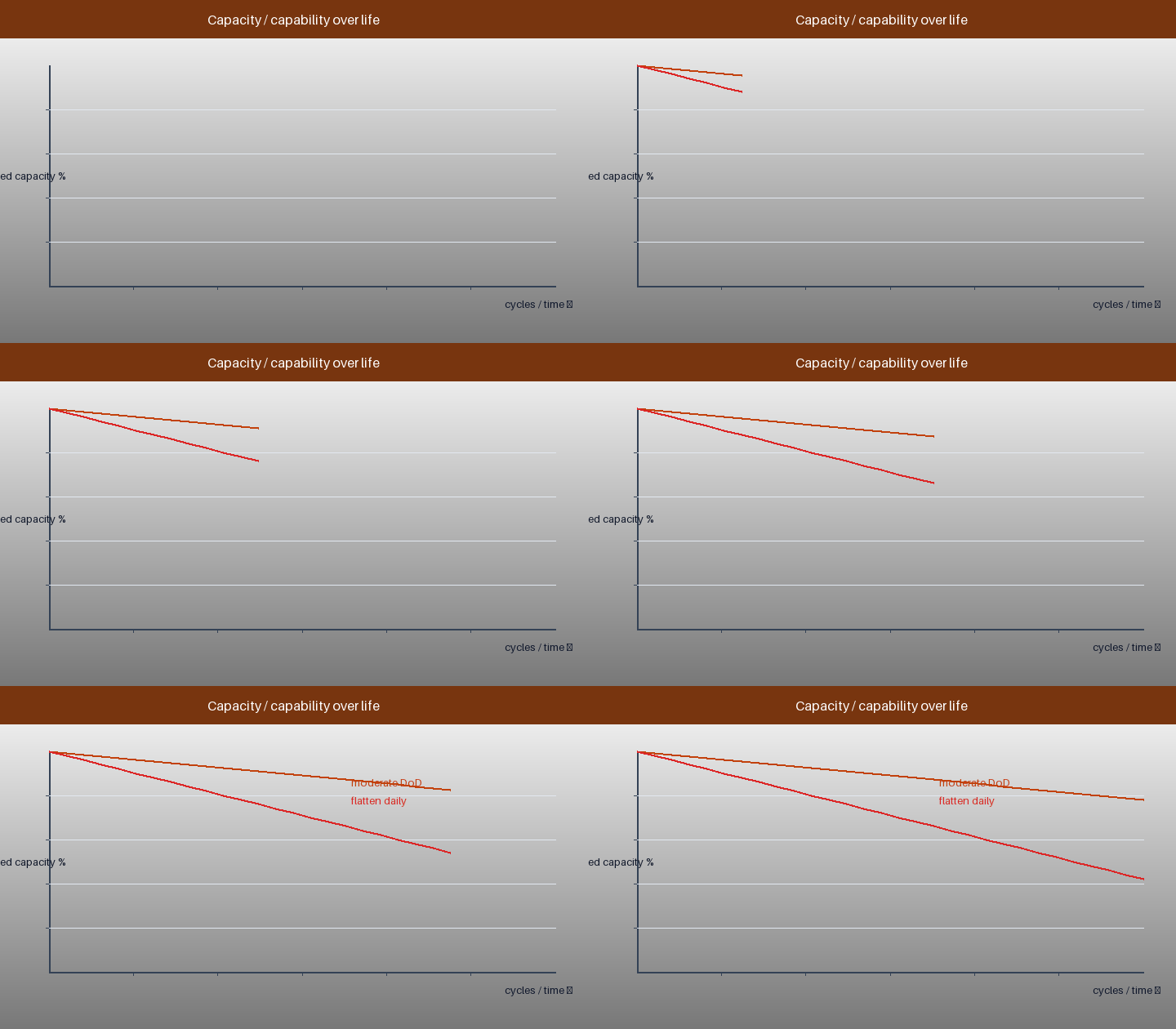
Because the lantern cycles nightly, the most predictive test is an accelerated cycle-life programme: repeatedly apply the field charge-discharge pattern - a limited solar-charge window, the measured multi-mode night profile, an occasional USB pulse - and track capacity and internal resistance. The second animated figure contrasts two regimes: a pack kept to a moderate depth of discharge with temperature-aware charging retains capacity far longer than one flattened daily and overcharged in heat.
The curve is the engineering basis for the warranty and for the end-of-life derating used in Paper B. It also flags a common field failure: packs that pass a single runtime test but degrade quickly because the charge manager never terminates correctly at high temperature.
Lanterns are dropped, rained on and left in vehicles. Ingress protection (commonly IP44 and above for outdoor-capable units), drop and vibration testing, and high/low-temperature operation all interact with the battery: welded tabs must survive impact, the pack must not short under compression, and low-temperature discharge must keep the LED and USB output alive. NiMH's ability to discharge below freezing is a genuine advantage for emergency preparedness in cold regions.
Photobiological and blue-light safety of the LED is evaluated alongside, and electromagnetic compatibility of the DC-DC converter is checked so the USB and LED driver do not interfere with the battery management sense lines.
The finished dossier combines the IEC TS 62257-9-5 test report (lumens, runtime per mode, charge behaviour, durability), the IEC TS 62257-9-8 quality self-declaration or certificate, the IEC 62133-1 cell-safety report, IEC 61951-2 performance data, the UN 38.3 transport summary, and the internal cycle-fade and environmental test records. Together they convert a 'rechargeable lantern' claim into a verifiable, tender-ready, insurable product.
For an OEM, specifying a cycle-robust, aqueous-safe, commodity-form-factor NiMH pack at the start is the single most effective way to make that dossier easy to build and the runtime warranty easy to honour.
Weijiang Power builds sealed nickel-metal hydride cells and custom rechargeable packs for home emergency lanterns, solar pico-lighting and preparedness products that must survive years of daily charge-discharge use. Share your lumen-hour target, brightness modes, solar-charge window, phone-charging requirement and temperature range and our engineers will size a cycle-robust, aqueous-safe NiMH pack with welded tabs and the connector your assembly needs. Review cell options and pack formats on the products page.


